


All-star Ethiopian hospitality on busy Fairfax Avenue
Buna, nestled between a coffee shop and an appliance store on Fairfax Avenue, is much more than an Ethiopian restaurant. When you walk inside, you’ll pass through a narrow aisle lined with local goods: moringa toothpaste, shea butter, vintage records, frankincense, berbere, safflower seeds, and Yirgacheffe coffee. The sunny yellow walls are covered in posters, photographs and maps — telling stories as colorful as the food itself.
The restaurant bug
There are only six tables at Buna, which makes eating here feel like being welcomed into someone’s home. That’s intentional. Owner Eyob Tadesse comes from a long line of restaurateurs. His grandmother ran a restaurant in Ethiopia; his uncles did, too. In 2011, Eyob and his wife, Helena, opened Buna to continue the family tradition.
Eyob grew up in the city of Dessie Wollo, Ethiopia. He came to the United States at the age of 14. He first landed in Fresno, working for his father, then moved to Los Angeles to help at his uncle’s restaurant down the block, Merkato (which is still going strong today). “It was good training,” Eyob says of those years spent prepping food, serving tables, and taking orders. Even better, it’s where he met his wife Helena, who was also working there as a server. “She’s an excellent cook,” he says. “Her mother gave her many of the recipes we use at Buna to this day.”
A unique coffee culture
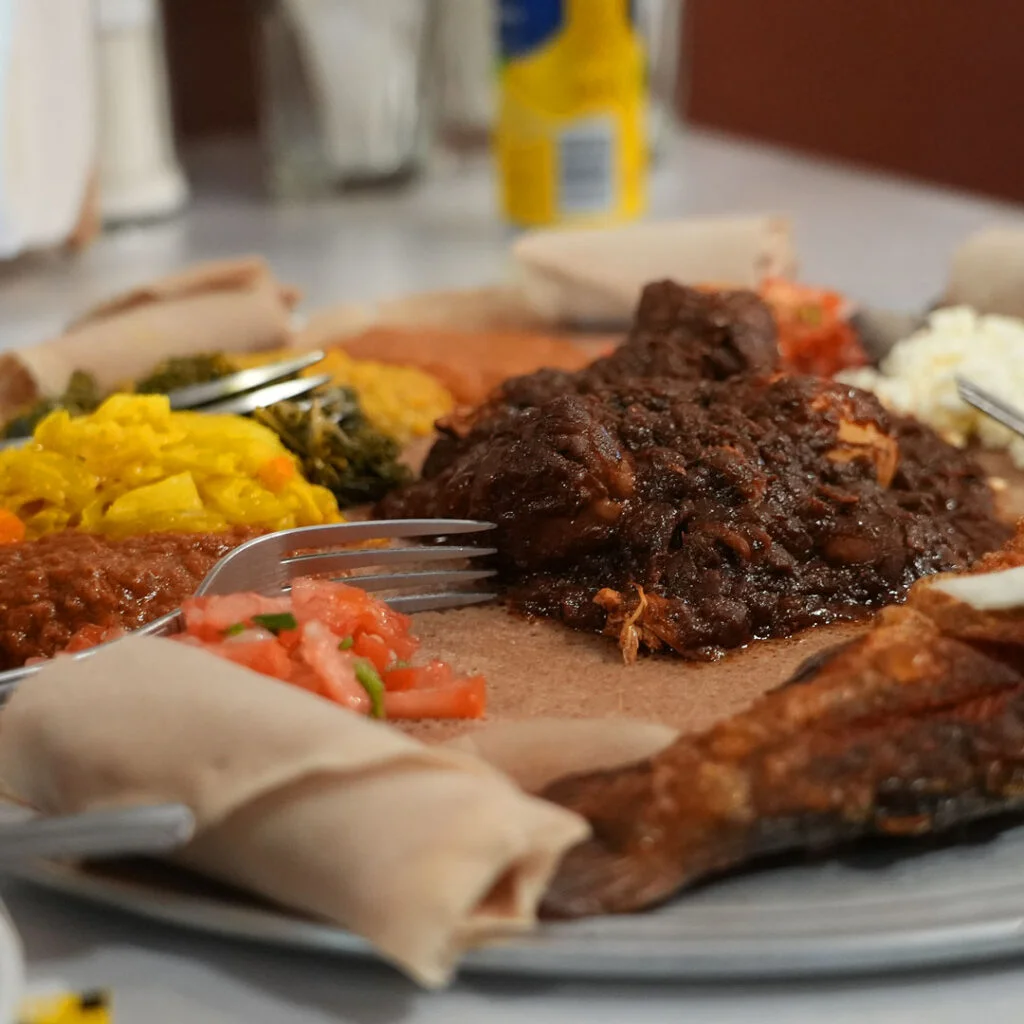
From Buna’s intimate dining room you can glimpse the open kitchen beyond the gleaming La Cimbali espresso machine. The cooking is straightforward and soulful –– you remember it for a long time afterwards. Favorites include white trout, doro wat (a spicy chicken stew with echoes of Mexican mole), crispy lamb, and “Eyobe Tibese,” beef sautéed with onion and jalapeño until charred and crackling. Everything arrives with spongy, tangy injera bread.
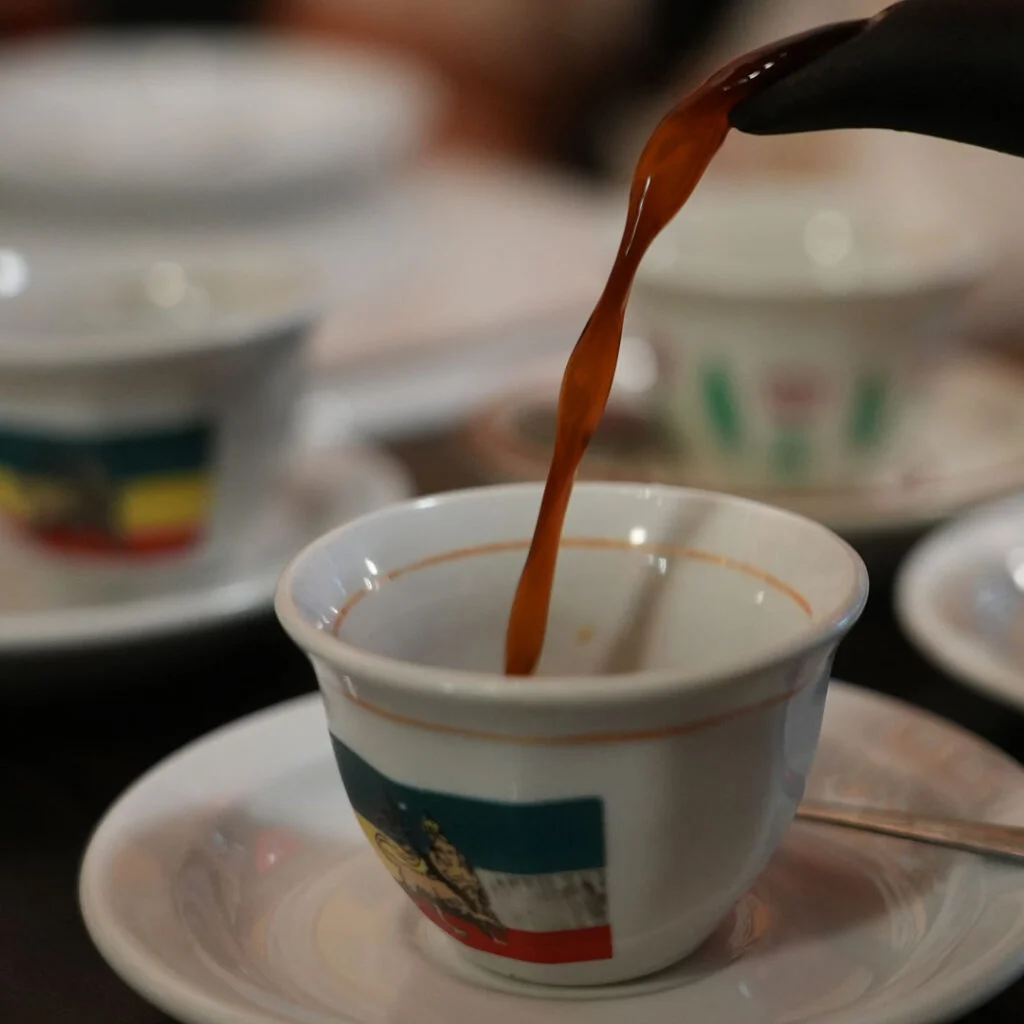
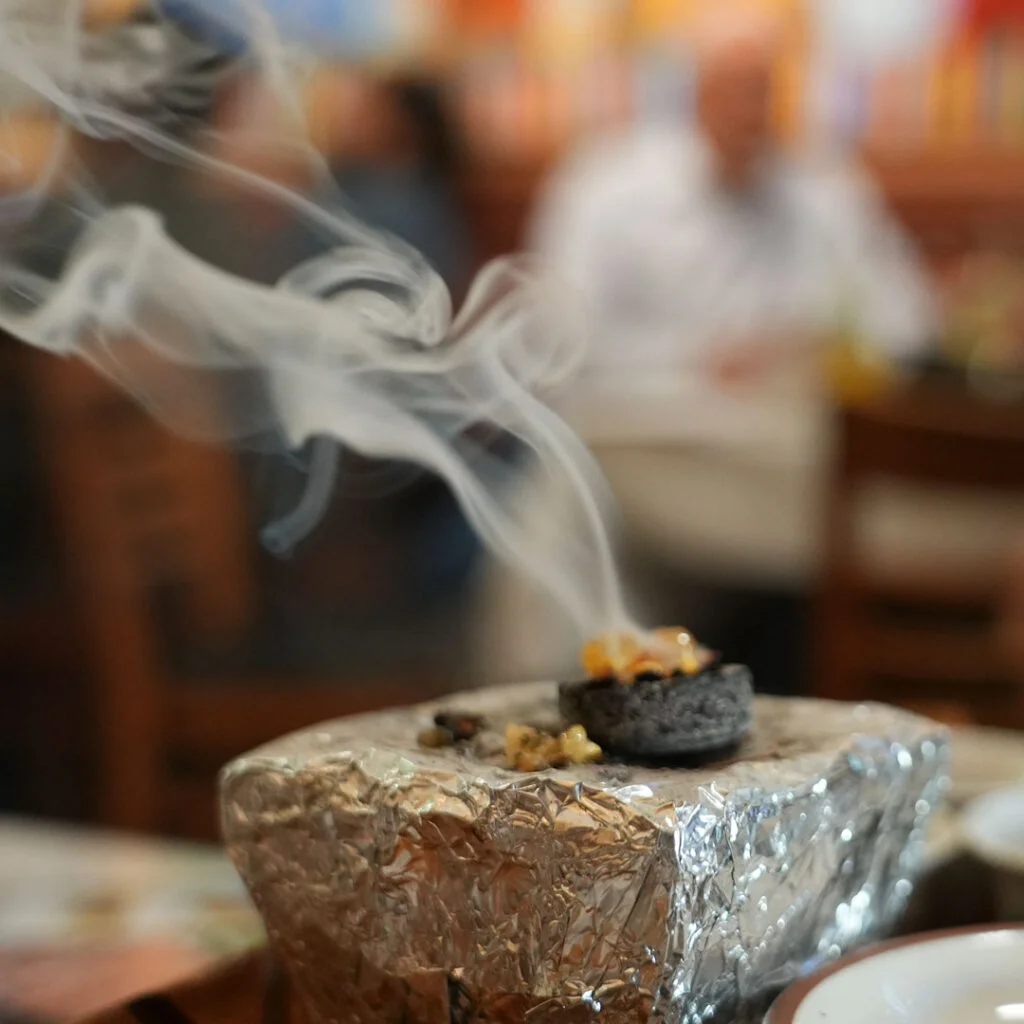
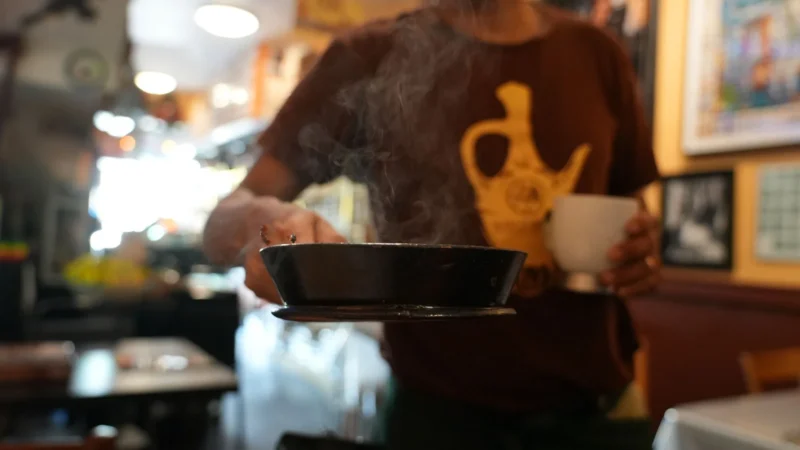
The meal finishes with coffee, naturally, since Buna, the restaurant’s namesake, means “coffee” in Ethiopian. And yet, the translation is imperfect, as coffee in this culture is so much more than a drink. It’s a pause in the day, a shared ritual, and a chance to commune with your neighbors. That’s why Eyob has put a full Ethiopian coffee ceremony on his menu: beans roasted and brewed in a traditional clay pot called a jebena, incense wafting through the room, small crackers served on the side. I asked Eyob what set Ethiopian coffee apart and he’s ready with an answer. “The coffee here doesn’t jolt you awake here. It’s all very natural.”