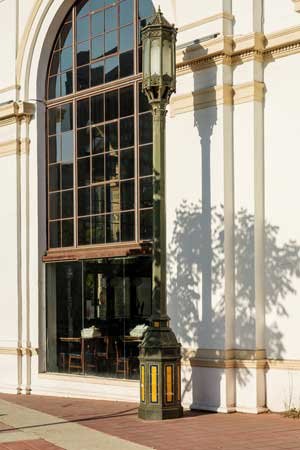
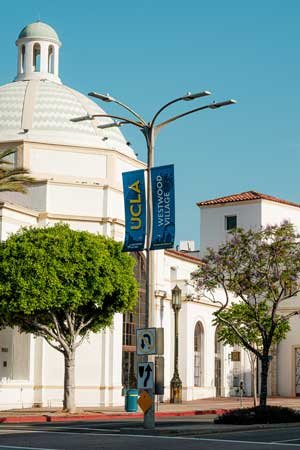
Tucked away on a sidewalk in the heart of Westwood Village stands an antique cast‑iron streetlight. It’s accented with filigreed ironwork at the top and blue‑and‑gold tiles around the base—a playful nod to UCLA. When Westwood Village was developed in the late 1920s, these elegant streetlights were everywhere. As the neighborhood grew and cars came to dominate the streets, lighting evolved in the name of safety. Today, modern cobra‑headed fixtures illuminate Wilshire and Westwood Boulevards, while smaller, pedestrian‑scaled lamps on the plazas echo the originals. This dense cluster of the old and new mirrors the ethos of Westwood Village: a place where history and change coexist.
Where traditions live on
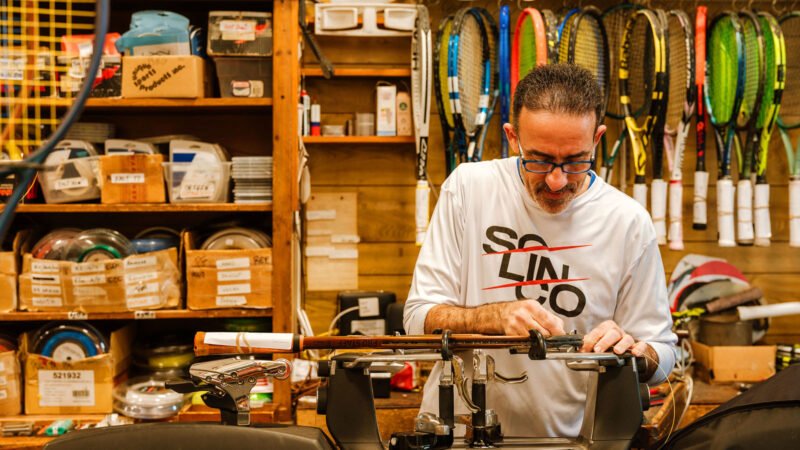
That same spirit carries inside the Village’s restaurants and shops. Many have been in business for decades. Westwood Sporting Goods on Gayley Avenue, for example, was established in 1934. Today it specializes in tennis—the area, owner Rick Hartman says, has more tennis courts per square mile than anywhere else in Los Angeles—but when it was run by his stepfather during the 1960s, the shop sold hunting and fishing gear, too (The evidence is still on the walls: the giant moose head above the cash register was once dusted by tennis legend Arthur Ashe.) Today, Hartman and his assistant manager keep busy stringing rackets for the UCLA women’s tennis team.
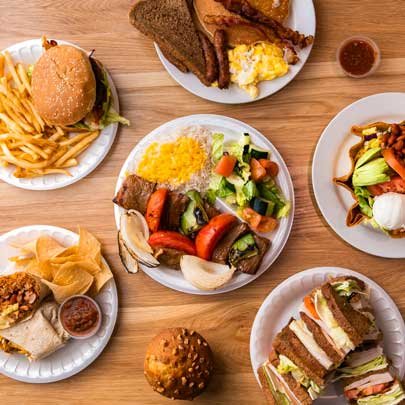
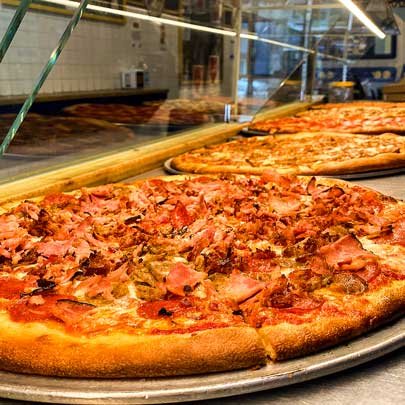
Across the street, Lamonica’s NY Pizza has been serving Brooklyn‑inspired slices and pies since 1980. The glazed tiles and distinctive MTA-themed signage decorating the walls might make you feel like you stepped inside a Brooklyn slice shop, too. But the shop’s appeal really lies in its consistency—both in the food and the role it plays for students, locals, and late‑night regulars. Even as Westwood Village evolves ––newcomers to the neighborhood like the Hammer Museum’s LuLu (2021), Lazy Daisy Cafe (2021) and Wolfsglen (2022) bring new options for day and night –– some places stay reassuringly the same.
Craftsmanship and community
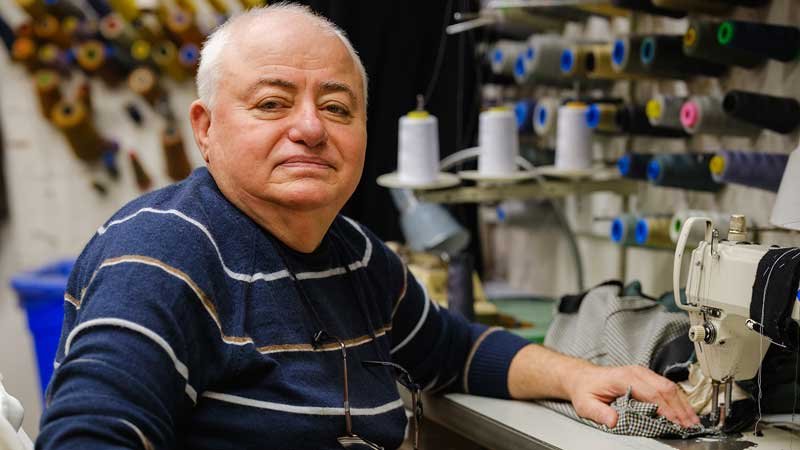
A few minutes’ walk away on Glendon Avenue, Gary’s Custom Tailoring and Boutique is another legacy business that opened its doors in 1985. It’s housed in a modern glass building, but inside, handsome wood paneling makes the space feel more like a relative’s living room. “They don’t have many places like this anymore,” says owner Gary Cholakyan, who has been in the tailoring business since finishing high school. “The more I work, the more I like this job,” he laughs. “It’s what I do.” Customers stop in to drop off pants and blouses for alterations — and to trade jokes. That familiarity is par for the course; many have been coming here for more than 35 years.
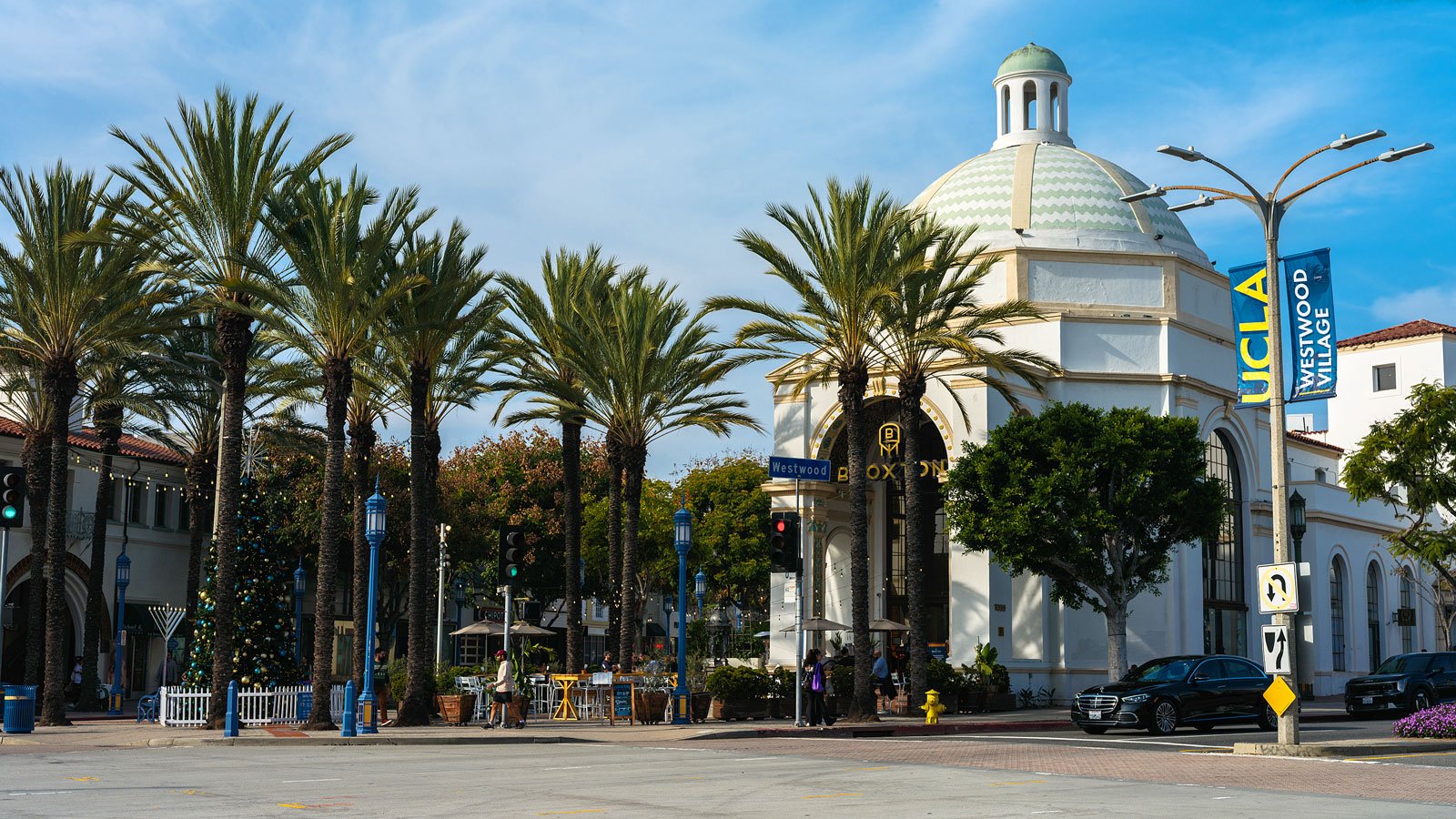
Yet Westwood Village is much more than a collection of beloved mom‑and‑pop shops. Its Mediterranean‑themed buildings and short, odd‑angled streets are just as central to its character. The iconic Janss Dome, built in 1929, is now home to Broxton Brewery and Public House. Right next door, a stretch of Broxton Avenue has been transformed into a lively and spacious pedestrian plaza outfitted with tables, chairs and twinkle lights. A few steps away, the Village Theatre—an Art Deco movie palace that once hosted Hollywood premieres—is undergoing restoration and is slated to reopen in 2027 under the stewardship of the American Cinematheque.
The next chapter
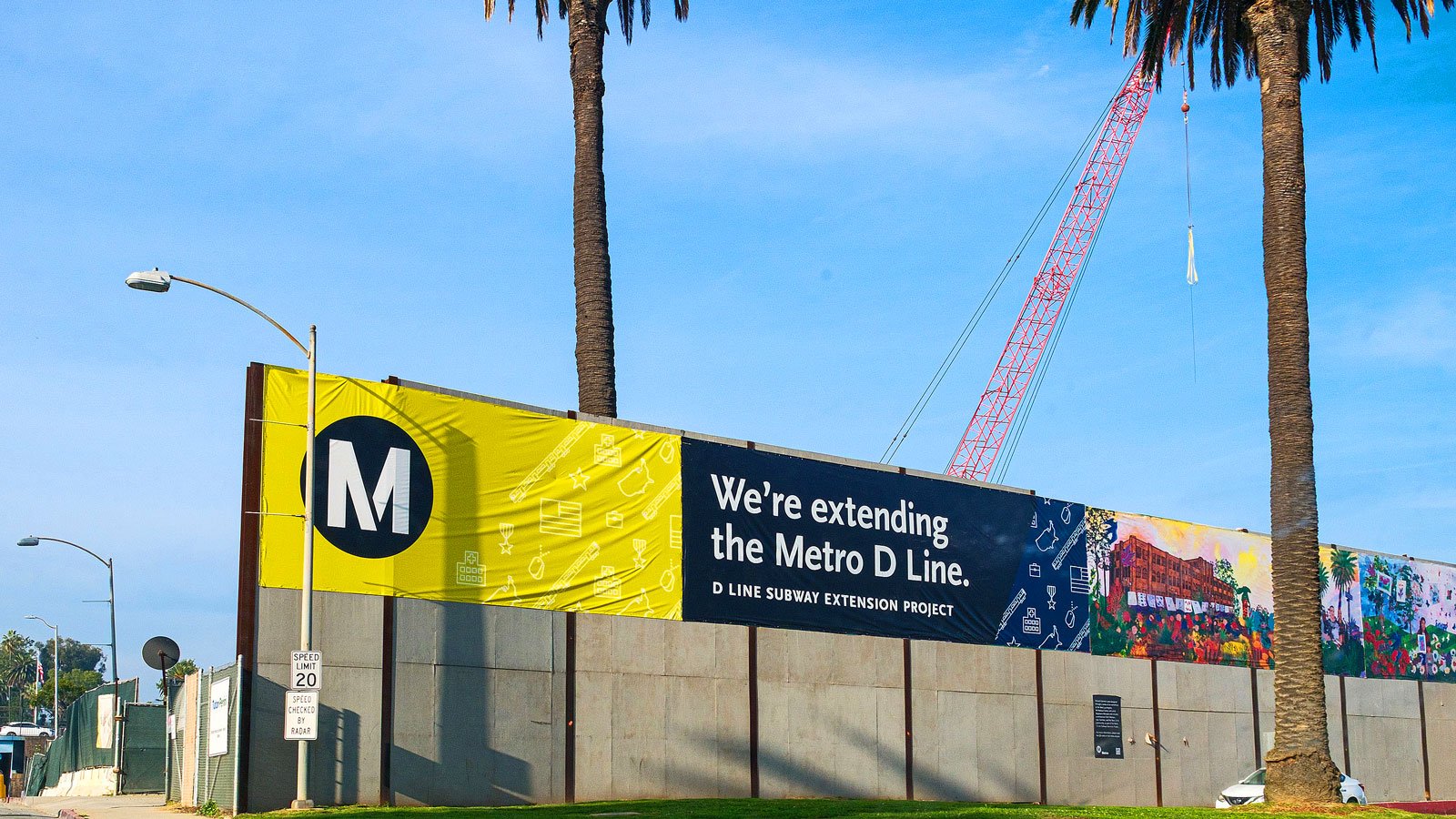
Perhaps the biggest change on the Village’s horizon is the anticipated opening of the final segment of the D Line Subway Extension in 2027. This last 2.56‑mile stretch includes two stations—Westwood/UCLA and Westwood/VA Hospital—and promises to reshape how people travel. The project’s contractor recently began removing temporary concrete decking covering Wilshire Boulevard during construction –– a major milestone for the project. Parking has never been easy in Westwood Village, and when the subway opens, students, residents, and visitors will have new ways to move in and out of the area. Better still, it will provide one‑seat rides between Westwood and Downtown Los Angeles in about 25 minutes, making this historic neighborhood more accessible than ever before.
About Eat Shop Play: Eat Shop Play is a construction mitigation program designed to support local businesses on key Los Angeles boulevards as Metro expands public transportation in Los Angeles. Today, Eat Shop Play is a growing community for small business owners, locals and visitors alike to connect, learn, expand their businesses and build more resilient neighborhoods.