
A.W. Ross was either a visionary or a gambler, depending on who you asked in 1920. He was developing a commercial strip along Wilshire Boulevard — wider streets, parking hidden behind the storefronts, facades designed for window shopping from a moving car — in a stretch of open land that most Angelenos considered too far from downtown to matter. The newspapers called it the Miracle Mile before the decade was out, because that’s what it looked like: a commercial miracle in the middle of nowhere.
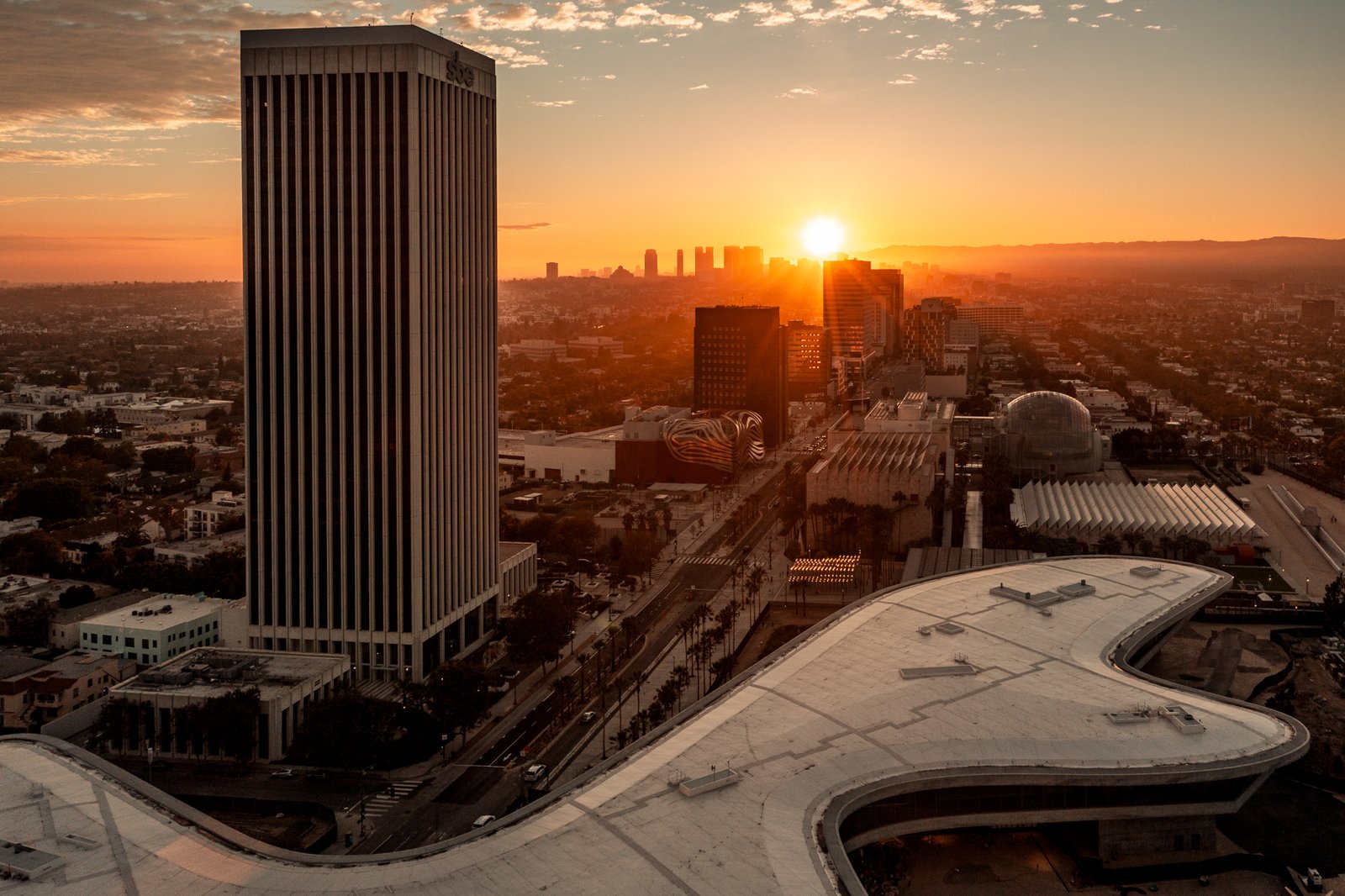
Ross won the bet. The department stores came, then the shoppers, then the reputation. A century later, many of those storefronts have transformed into some of the most significant cultural institutions in Los Angeles — and the stretch of Wilshire between Fairfax and La Brea has become what Ross probably couldn’t have imagined: Museum Row, with some of the best food and coffee in the city tucked in the spaces between the marquees. The D Line’s Wilshire/Fairfax station puts all of it within a short walk.
Here is a Sunday that does it justice.
Begin with coffee done right
At Cafe Fresco, the appeal is immediate: sunlight through the windows, the low hum of conversation, the smell of espresso pulling somewhere behind the counter. It’s the kind of neighborhood café that feels settled into its block — unfussy, welcoming, and quietly dependable in a city that changes fast.
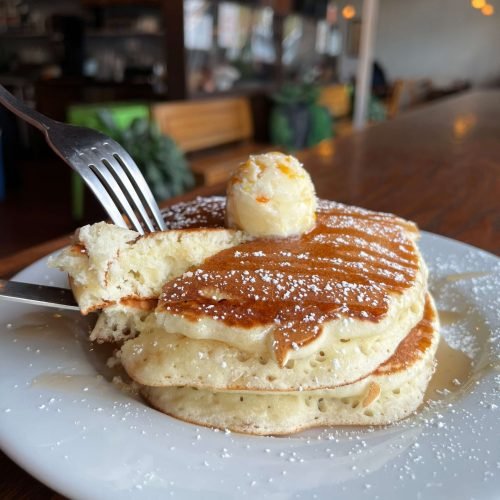
The menu leans classic but generous. Cappuccinos arrive balanced and properly textured, cold brews strong enough to wake up the morning, and the pastries stacked near the register rarely make it past noon. Breakfast sandwiches and paninis keep the regulars loyal, while the outdoor patio turns into prime people-watching once the day warms up. There’s no rush to any of it. Café Fresco understands that a good coffee shop isn’t only about caffeine — it’s about giving people a place to land for a little while before the city pulls them back into motion.
Spend the morning at an automotive landmark
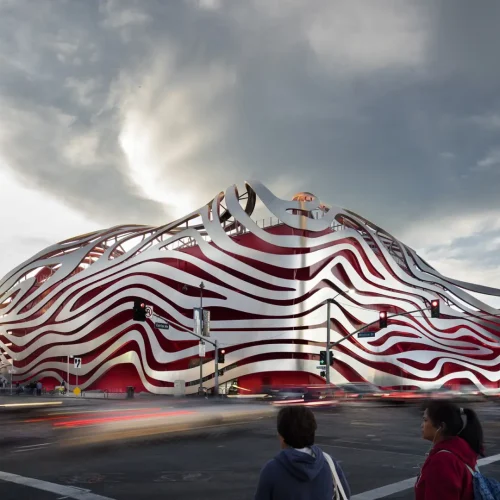
The Petersen Automotive Museum has been one of the Miracle Mile’s defining landmarks since 1994, when magazine publisher Robert Petersen opened it in this stretch of Wilshire he loved. The building became even more recognizable after its 2015 redesign — swooping silver ribbons over a red base — a structure that stops foot traffic in both directions. Inside, 25 galleries and more than 100 vehicles tell the history of the automobile with more cinematic ambition than most film museums manage. The DeLorean from Back to the Future is here. So is the Batmobile from Batman Returns. The current exhibition, A Fast and Furious Legacy, traces 25 years of vehicles and iconography from one of Universal’s most durable franchises.
Lunch in a secret garden
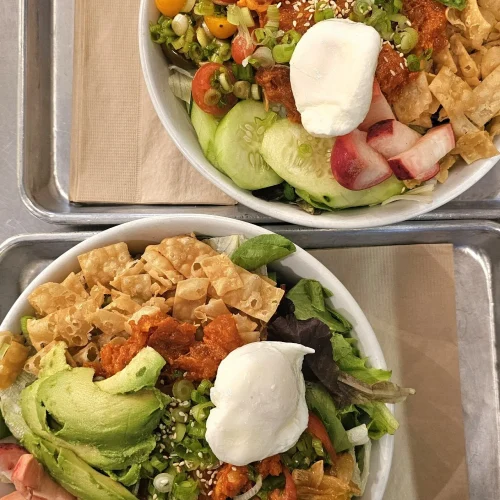
Yuko Kitchen is tucked along Wilshire in a way that rewards the people who find it — plants hanging from the ceiling, the light filtered green, the room feeling more like a garden than a restaurant. The menu is Japanese fusion with a California sensibility: avocado rice cakes, crispy wonton nachos, garlic salmon sashimi salad, and the signature mermaid roll, all built to energize rather than weigh you down. The salad dressing is a house secret that regulars discuss in reverent tones. Good portions, reasonable prices, and the kind of genuinely warm service that makes first-timers feel like regulars. Popular with museum crowds — arrive early or late to beat the rush.
An afternoon on Museum Row
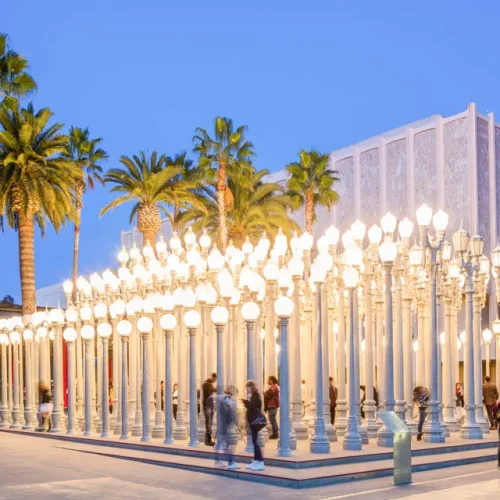
LACMA’s new David Geffen Galleries opened after more than a decade of anticipation — a 724-million-dollar building designed by Pritzker Prize-winning architect Peter Zumthor that soars above Wilshire Boulevard and reshapes the entire block. The organizing principle inside is wandering: Zumthor deliberately erased the hierarchies and fixed boundaries of conventional museum design, so the experience rewards curiosity over itineraries. Before you go in, linger outside. Chris Burden’s Urban Light — 202 restored cast-iron street lamps arranged in a quiet grid — is one of the most photographed public artworks in the city. Michael Heizer’s Levitated Mass, a 340-ton granite boulder suspended over a concrete trench, still stops people mid-stride. On Friday evenings, the jazz series on the grounds draws picnic blankets and lawn chairs from across the neighborhood; arrive early if you want a spot.
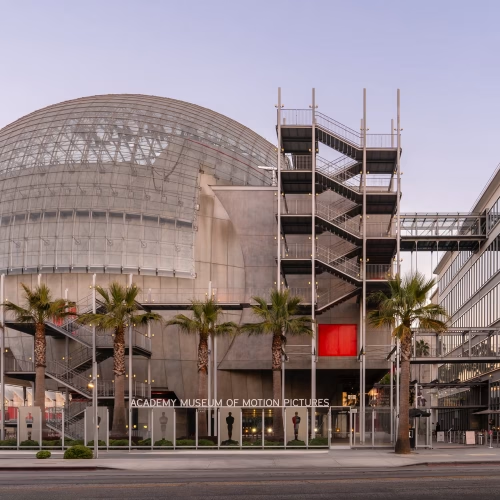
Next door, the Academy Museum of Motion Pictures occupies what was once the May Company’s landmark Streamline Moderne department store at the corner of Wilshire and Fairfax. Architect Renzo Piano integrated the original 1939 building with a new glass-and-steel sphere housing a state-of-the-art theater where classic and new films screen regularly. It’s the largest museum in the country devoted entirely to the art and science of filmmaking. The current exhibition on Jaws is the kind of deep dive that reminds you why movies matter. Before you leave, stop at Fanny’s — the museum’s Hollywood-inspired restaurant named after Fanny Brice, the vaudeville legend immortalized in Funny Girl — for a coffee.
End the night with dinner at an institution
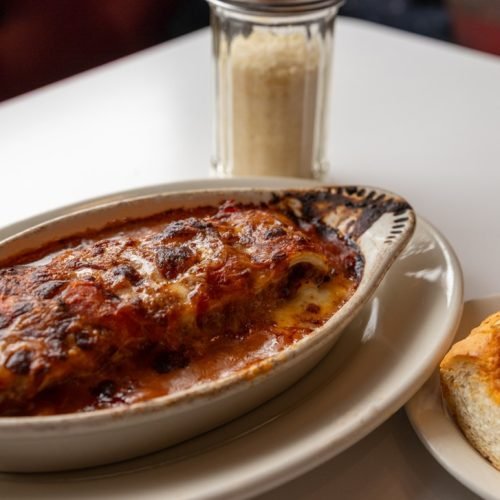
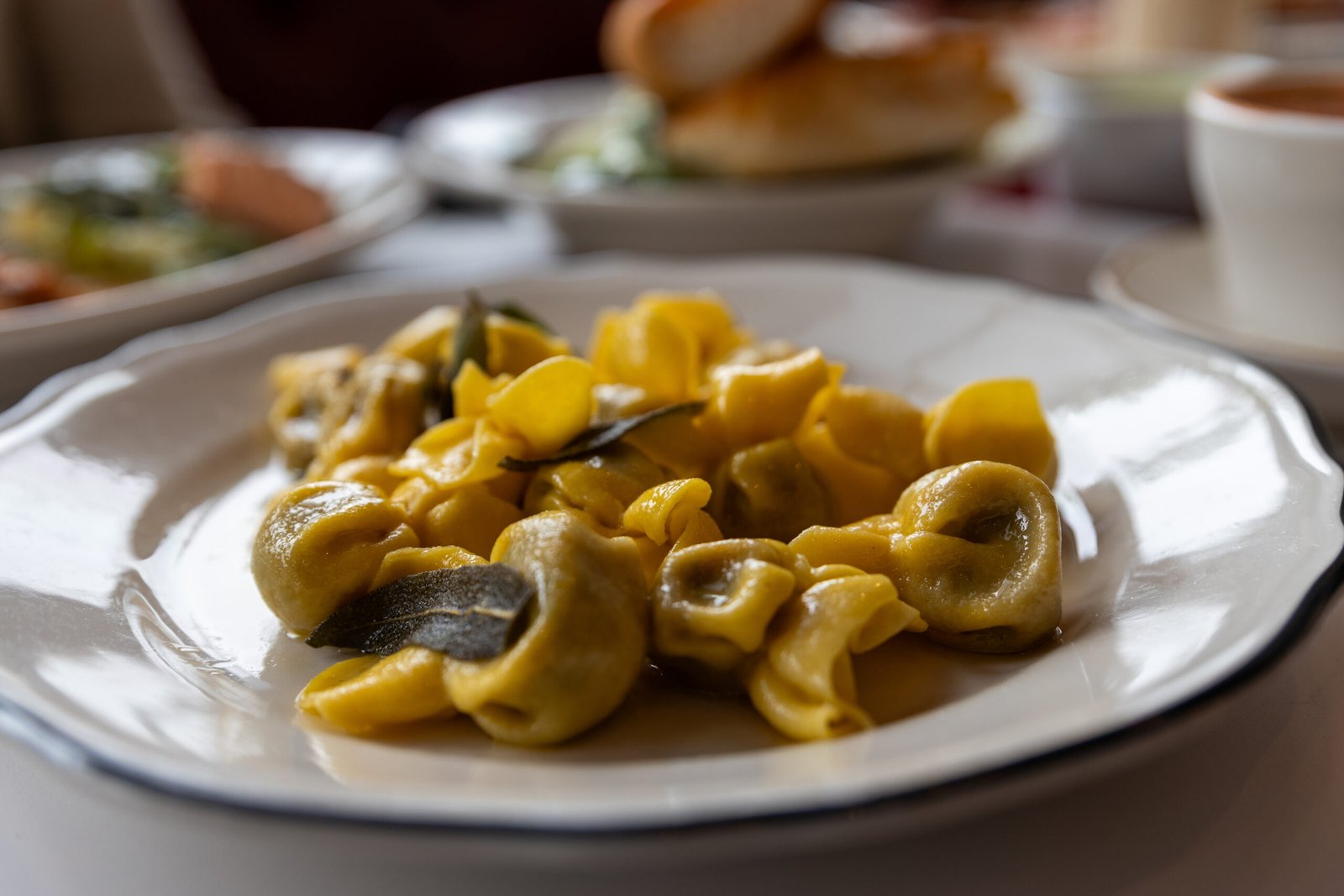
Andre’s Italian has been on the Miracle Mile since 1963, which makes it one of the oldest businesses on the corridor and one of the most stubbornly consistent. Mr. Andre came to the United States in 1948 after training in Paris, opened in New York, then Beverly Hills, then settled here for what he called a more casual and relaxed experience. The menu is old-school red sauce Italian without apology: veal parmesan, beef lasagna, pizza, and daily specials that create the kind of routine and tradition a rapidly changing neighborhood needs to anchor itself. Still family owned. Still enormous portions. “Great Italian food at a reasonable price” has been the motto for more than sixty years. It still holds.
A.W. Ross would recognize almost none of it. The Miracle Mile has been remade many times over since his gamble paid off a century ago. But the instinct that drove him — that Wilshire Boulevard could hold something worth crossing the city for — turns out to be exactly right.